Mon–Sun: 8 AM–9 PM(747) 269-3817
Precision Calabasas ConcretePrecision Calabasas Concrete

Concrete retaining walls in Calabasas CA - a wall that drains and holds the slope

Slope slipping or an old wall starting to lean? We build concrete retaining walls with the drainage behind them planned first.

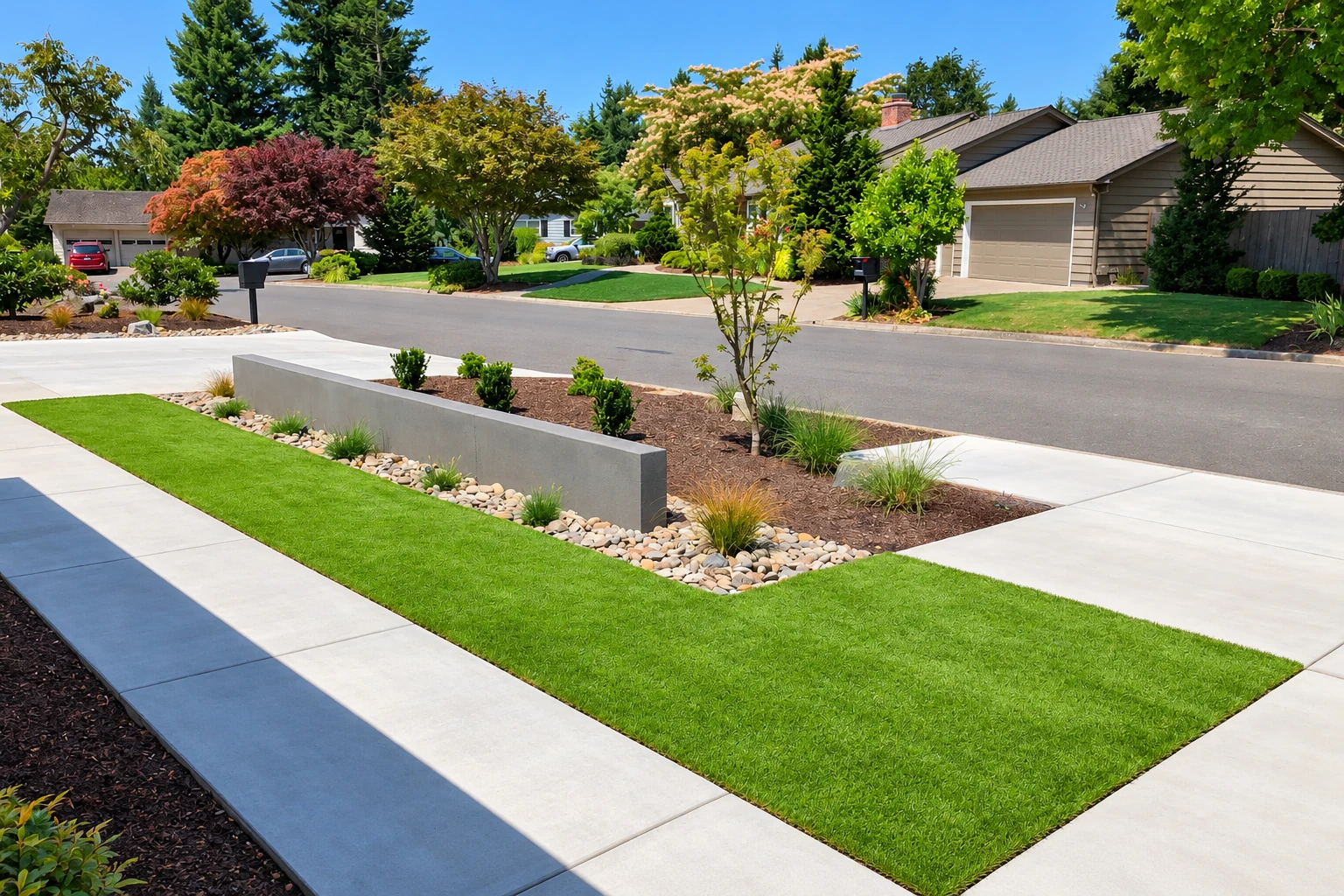
Low concrete retaining wall edging a landscaped garden bed beside a sidewalk and lawn.

What goes into building a retaining wall on a Calabasas slope?

A concrete retaining wall is a poured wall on a footing that holds the soil on a slope in place. In Calabasas, that usually means turning a hillside that keeps shedding dirt into a yard you can actually use.

Most calls start with something you can see, like soil washing onto the patio after a storm, a slope creeping toward the house, or an old wall that's started to lean or bow. When a wall leans, the cause is usually behind it, not in the face you're looking at.

The price mostly comes down to how tall and how long the wall is, how much digging the slope takes, how easy it is to get concrete and equipment to the spot, and whether an old wall has to come out first. The schedule turns on whether the city or county asks for a permit and how long that takes, and then on curing, the days new concrete needs to gain strength before the forms come off and the soil goes back against it. I'll walk the slope with you and give you your own figure in the estimate.

What happens after you call us about a retaining wall?

You'll deal with me from the first visit through the last load of dirt, and here's how that goes.

I come out and look at the slope myself

After you call or send a message, I come out to see the slope, find where the water runs now and check how we'd get concrete and equipment to the spot. I listen to what you want the yard to do, answer your questions and write up the estimate.

Permits checked with your city before we dig

Whether a wall needs a permit is up to the city or county, not us, so we check with the office that covers your address before we start. Whatever they ask for, we work through it with you, and then we do the prep.

On the job with our crew since 2020

I started this business in Calabasas in 2020, and I'm on site with our crew from the dig through the pour and the cleanup. California's state licensing board treats forming, pouring and finishing concrete as concrete contractor work. We're fully licensed and insured.

How we build a concrete retaining wall

Water building up behind a wall is what pushes it over, so we treat the drainage and the backfill, the soil and gravel packed in behind the wall, as the main part of the job and not the last step. We build the drain at the base so you can get to it later and clear it out. All of that is buried by the end of the job, which makes it the first thing a tight budget wants to cut, but if money has to come out somewhere I'd rather it come out of the wall's finish than out of what's behind it, because a good-looking wall with water trapped behind it is still a problem.

A wall often goes in to make room for something flat, like concrete pool decks cut into a hillside yard, and we plan the water off that deck so it doesn't end up behind the wall. When the wall frees up level ground for a building, we handle concrete floor installation too, so the slab and the wall get planned together.

  • A footing dug out and formed for the wall to stand on
  • Rebar set through the footing and up into the wall
  • A poured concrete wall, left in its forms until it cures
  • A drain at the base of the wall with access so it can be cleared
  • Backfill packed behind the wall, and the site cleaned up after

From the first stake to the last load of backfill

Here's what you'll see in your yard once the job starts, and why each part takes the time it does.

  1. Stake out the wall with you

    Before anything's dug, we mark where the wall runs and how tall it stands, so you can see it on your slope and change your mind while it's still string and stakes. I also look at where water comes down now, because that tells us where the drain needs to go.

  2. Dig the footing and set the steel

    We dig out for the footing, the wide concrete base the wall stands on, and set rebar, the steel bars that help the wall carry the push of the soil. This is the part I watch closest, because nobody sees it once the concrete's in.

  3. Pour, then wait on the cure

    We pour the footing and the wall inside the forms, then leave the forms standing while the concrete cures. It can look like nothing's happening for a while, but pushing soil against concrete that hasn't hardened yet is an easy way to crack a new wall.

  4. Drain, backfill and clean up

    Once the forms come off, the drain goes in at the base and we pack backfill behind the wall in layers. I show you where the drain access points are before we leave, and our crew cleans up the site.

Get a retaining wall estimate based on your slope

Send the form or call (747) 269-3817, and we'll reply within one business day to set a time for me to come out. The estimate is free, done at your property, and there's no pressure to book. If you can, include a few photos of the slope, a rough length and height for the wall, and whether your lot has a mapped ridgeline.

(747) 269-3817

Questions about retaining walls in Calabasas

What makes a concrete retaining wall fail?

Poor drainage is by far the most common reason retaining walls perform badly, and left alone those problems can turn into outright failure. When water can't get out, the backfill gets soaked, pushes harder on the wall and holds less against sliding, so the drainage plan is the first thing I'd compare between quotes. Backfill that's mostly gravel and coarse material drains well, packs down easily and adds sliding resistance, so it's fair to ask any crew what fill they plan to use.

Are weep holes or cleanable drains better for a retaining wall?

Drains built to be cleaned out keep a wall draining more reliably than traditional weep holes, the small openings through the wall face, which are likely to clog over the years. If you plan to look after the wall, ask whether its drains are built so they can be maintained.

Where do I find the City of Calabasas retaining wall permit handouts?

The city's forms and handouts page lists a retaining wall block section handout and a handout on work that's exempt from permits. They're worth reading before you plan a wall, and the city's building and safety office is the place to ask about yours. As I mentioned above, we check with them before we start.

How much does a retaining wall cost in Calabasas?

A retaining wall in the Los Angeles area usually costs about $12 to $36 per square foot of wall face, installed, and that's the going rate around here, not our price. Where yours lands comes down to the things I listed near the top, mostly height, length, digging and access. One concrete masonry trade group says segmental block walls typically cost 25 to 40 percent less than poured concrete walls, so if price comes first, it's fair to get quotes on both.

Building walls on Calabasas hillsides

A lot of Calabasas lots sit on hillsides, and the slope shapes the wall as much as the soil does. If your property has a mapped ridgeline, the city requires it to meet its standards for grading, site planning, landscaping, slope maintenance and hazards, so on those lots the wall gets planned around those rules from the start. The state geological survey also publishes landslide maps and seismic hazard and fault zone maps, and on a steep lot they're worth a look before you settle on where a wall goes.

If you'd rather pull a permit yourself as an owner/builder, the city's forms list says you'll need a Property Owner's Disclosure to do it. We're based in Calabasas and work across the cities around it, from Agoura Hills and Topanga to Malibu, where terraced yards and steep lots make up a lot of what we see. If your city isn't on our list, call and ask.

Have me take a look at your slope

Questions about a wall are easier to answer standing at the bottom of the slope than over the phone, so call (747) 269-3817 or send the form and I'll come out.

If you just want to ask about a wall before booking anything, send me a message and I'll answer it.

Tell us about your project
(747) 269-3817Get an estimate